


Blog post
Give your customers a summary of your blog post.
Choose innovative and durable gardening tools. Learn more.

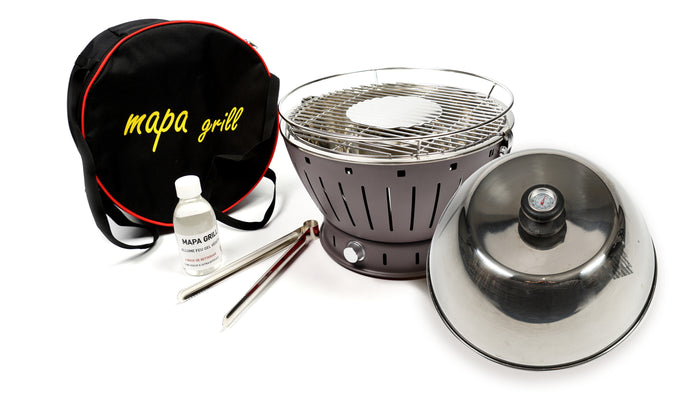
The travel barbecue is the ideal companion for gourmet getaways. Compact, lightweight, and easy to carry, it adapts to all your adventures: picnics, camping, the beach, or road trips. It allows you to cook outdoors with the authentic pleasure of grilling, wherever you are. Designed to be quick to set up and simple to use, it ensures efficient and tasty cooking. With the travel barbecue , every stop becomes a moment of sharing and conviviality around the fire. No more need to compromise between mobility and cooking quality.
The travel barbecue fits easily into a trunk or bag. Lightweight and compact, it can accompany you on all your outings without taking up any space. Perfect for gourmet adventurers who like to travel light without giving up the grill.
With its handles, cover, and foldable design, this barbecue is designed for travel. It can be carried by hand or easily placed in a bag. Ideal for picnics, road trips, or impromptu weekends.
Enjoy your favorite barbecues anywhere. The travel barbecue adapts to any environment: beach, mountains, countryside, or even parking lot. It guarantees fast and delicious cooking, wherever you set down your suitcase.
In just a few minutes, it's ready to use. No complicated assembly, no wiring: just go out, turn on the power, and cook. It's designed to adapt to the spontaneous rhythms of nomadic life without compromising on pleasure.
Its small size and efficient heating allow for fast cooking with little fuel. This makes it economical and resource-friendly, while maintaining optimal cooking for your favorite grilled dishes and meals.
Compact, robust, and often multi-fuel, it's perfect for campers. It works on a table or on the ground, can be moved around, and remains reliable in all conditions. A must-have for cooking under the stars with ease.
With a travel barbecue , every outing becomes an opportunity to share a delicious moment. Lightweight, compact, and quick to set up, it goes with you camping, to the beach, in the mountains, or in your van. No need to look for a restaurant: cook on site, outdoors, with your favorite recipes. It's easy to transport, heats up quickly, and cleans up in a flash. For those who like to be on the move without giving up the pleasure of grilling, it's the ideal companion for your adventures.
Clearing land helps reduce fire risks, improve accessibility, and enhance the value of the space. It's also essential to prevent the proliferation of pests (rodents, ticks, mosquitoes). It helps clean the soil, maintain useful vegetation, and prepare for construction or gardening projects. It's a legal requirement in certain high-risk areas. Proper clearing contributes to the safety, aesthetics, and good health of your plot, whether it's inhabited or fallow.
To clear a plot of land , you can use different tools depending on the surface area and plant density: thermal or electric brush cutter, trimmer, sickle, or even chainsaw for thicker branches. Protective equipment is essential (gloves, goggles, boots, helmet). For sloping or very grassy terrain, a wheeled brush cutter can be ideal. The main thing is to choose a tool adapted to the nature of the soil, the environment and the vegetation to be removed, for quick and safe work.
It is recommended to clear a plot of land before spring (February to April) or in the fall, excluding periods of extreme heat or drought. In areas at risk of fire, regulations may require mandatory clearing before summer. It is also useful to clean up regularly after heavy rains, which encourage rapid regrowth of vegetation. By maintaining your land several times a year, you make the job easier in the long term and ensure sustainable management of natural areas.
Clearing sloping land requires caution and the right tools. Use a harness-mounted or backpack brushcutter for greater stability. Start at the top of the slope and work your way down. Wear non-slip footwear and secure the area well. For very steep slopes, opt for long-handled or motorized tools on wheels. You can also create temporary landings to improve footing. Never work alone on steep slopes. Safety, consistency, and strategy are key.
Yes, in many regions, clearing land is regulated by law, particularly in forested or fire-prone areas. "Mandatory clearing" requires the removal of certain flammable vegetation within a specific radius around homes (often 50 meters). Failure to comply with these rules can result in fines and liability in the event of a disaster. It is therefore important to check with your local town hall or DDT before carrying out any work, to ensure compliance with the required distances, periods, and conditions.
After clearing a plot of land , you must manage waste responsibly. Branches and cut grass can be shredded to make mulch or compost. You can also take them to a recycling center if the volume is large. In some municipalities, green collections are provided. Avoid burning plants, especially during dry periods, unless this is explicitly authorized by municipal decree. Proper waste management ensures a clean, healthy plot of land that complies with environmental regulations.